
Max Laser Source - Cutting & Welding Sources in India
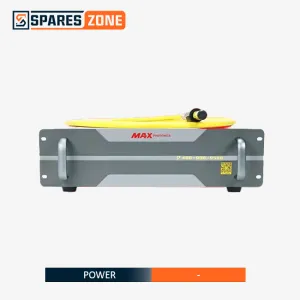
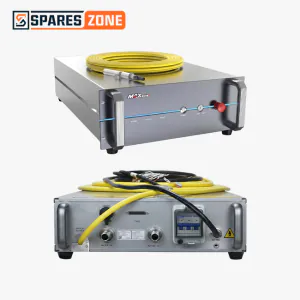
SparesZone is a Max (Maxphotonics) laser source supplier in India, stocking genuine Max fiber laser cutting sources from 1.5 kW to 20 kW and Max fiber laser welding sources from 1.5 kW to 3 kW. Whether you are building a new CNC fiber laser cutting machine, retrofitting an existing one, or replacing a failed resonator, the Max laser source power you need is in stock and ready to dispatch from Ahmedabad with a GST invoice. The laser source is the single most expensive component in your machine - the "engine" that pumps the beam into the cutting head - so it is the one part you specify carefully and buy genuine.
Max (Maxphotonics) is one of the most widely installed fiber laser source brands on Indian shop floors, alongside Raycus and IPG. It sits in the value tier - close to Raycus on price but with a strong reputation for output stability - which is exactly why it has become a default choice for fabricators who want IPG-class cutting performance without the IPG price. A genuine Max source delivers stable beam output, a wide power tunability range, and a maintenance-free design built for round-the-clock running.
As a Max laser source supplier serving fabricators, machine builders, and maintenance teams across India, every order ships with a GST invoice and pan-India delivery. Not sure which power rating suits your material and thickness, or whether you need a cutting source or a welding source? WhatsApp your machine details to +91 92740 95891 and we will confirm the correct Max source, interface, and chiller requirement before you order.
Max (Maxphotonics) - Company Overview
Maxphotonics Co., Ltd. ("Max") is headquartered in Shenzhen, China, and was founded in 2004 as one of the first Chinese manufacturers of fiber lasers. It develops and produces its own fiber lasers and core optical components - including its own pump modules - which gives it the vertical integration behind its competitive pricing. Today Max is one of the largest fiber laser makers in the world by volume and holds a dominant share of the Asian market.
Max's industrial range covers continuous-wave (CW) fiber lasers for cutting and welding, QCW lasers for drilling and spot welding, pulsed fiber lasers for marking, and diode lasers. For laser cutting and welding - what most Indian buyers need - the two relevant families are the MFSC single-module series (lower-to-mid power, excellent beam quality) and the MFMC multi-module series (high power, for thick and high-reflective materials). CW output runs from low power up to 50 kW at the top of the range, with single-mode units up to 6 kW.
What is a Max Fiber Laser Source?
A fiber laser source - also called a laser generator, resonator, or laser power source - creates a high-energy beam inside ytterbium-doped optical fibers and amplifies it to the rated output power. Unlike an old CO2 laser that uses gas and mirrors, a fiber laser is solid-state: the beam is generated and guided entirely within fiber, which is why fiber sources are compact, energy-efficient, and largely maintenance-free.
In a cutting machine the Max source connects to the RayTools, WSX, Precitec, or similar cutting head through a QBH fiber connector. The source itself does not "cut" - it supplies the beam; the head focuses it and the assist gas blows away the molten metal. The source's power rating is the hard limit on your machine's capability: a 1.5 kW Max source is for thin sheet, while a 12-20 kW Max source cuts thick plate at high speed. Choosing the wrong power is the most expensive specification mistake a buyer can make.
Why Max Laser Sources Are Used in Fiber Laser Machines
Max has become a mainstream choice on Indian and imported machines for practical, buyer-led reasons - not marketing. Here is what actually drives the decision:
- Strong value-to-performance ratio. Max delivers most of the real-world cutting performance of premium brands at a far lower purchase price, which shortens payback and improves ROI for general fabrication.
- Reputation for stability. Among the affordable Chinese sources, Max is widely regarded as one of the more stable in continuous output - important for unattended, multi-shift running.
- Vertical integration. Max designs and builds its own pump diodes and optical components in-house, which supports consistency and keeps cost down.
- Maintenance-free, water-cooled design. No consumable optics inside the source; the modular, sealed build is engineered for 24/7 duty.
- Wide power tunability. Power is continuously adjustable (typically 10-100%), so one source handles a wide range of material thicknesses.
- Universal QBH output. Max sources fit standard QBH-interface cutting heads, so they pair with the heads and machines already common in India.
- Availability & support in India. Units and spares are readily available, with local technical support - so downtime stays low.
Max Laser Source Power Range
Power is the most important number on a laser source - it decides what your machine can cut and how fast. Use this guide to match power to your work. Exact cutting capacity depends on the material, assist gas, cutting head, and machine, so treat these as practical ranges, not guarantees.
| Max Source Power | Module Type | Typical Mild-Steel Cut (O₂) | Best For |
|---|---|---|---|
| 1.5 kW | Single-module | up to ~10 mm | Thin sheet, signage, light fabrication, tube |
| 2 kW | Single-module | up to ~12 mm | General thin-to-medium sheet metal |
| 3 kW | Single-module | up to ~16 mm | Versatile mid-power workhorse; mixed fabrication |
| 6 kW | Single / multi-module | up to ~20-25 mm | Thick plate, faster thin-sheet speeds, job-shop volume |
| 8 kW | Multi-module | up to ~25 mm | Heavy plate, high throughput |
| 10 kW | Multi-module | up to ~30 mm | Thick structural steel, high-speed production |
| 12 kW | Multi-module | up to ~35 mm | Heavy industry, fast thick-plate cutting |
| 15 kW | Multi-module | up to ~40 mm | Very thick plate, shipbuilding, heavy structures |
| 20 kW | Multi-module | 40 mm+ | Maximum-power production cutting of heavy plate |
Cut capacities are typical mild-steel figures with oxygen; nitrogen (clean-edge) cutting on stainless and aluminium reduces the maximum thickness for a given power. Confirm against your machine and material.
Max welding sources (1.5 / 2 / 3 kW) are single-module sources tuned for hand-held and automated laser welding - sheet-metal fabrication, kitchenware, EV/battery and general metal joining - where a stable, fine beam and good back-reflection handling matter more than raw power. View Max cutting source → View Max welding source →
Max Source Technical Specifications
Indicative specifications for Max CW fiber laser sources. Exact figures vary by power, series (MFSC single-module vs MFMC multi-module), and configuration - request the model datasheet before finalising optics and interface.
| Parameter | Specification |
|---|---|
| Brand / Series | Max (Maxphotonics) - MFSC single-module / MFMC multi-module CW |
| Output power (cutting) | 1.5 / 2 / 3 / 6 / 8 / 10 / 12 / 15 / 20 kW |
| Output power (welding) | 1.5 / 2 / 3 kW |
| Operating mode | Continuous wave (CW), modulated |
| Centre wavelength | ~1080 nm (±5 nm), typical |
| Power tunability | 10-100%, continuously adjustable |
| Beam quality (BPP) | Single-module ~0.3-0.4 mm·mrad; multi-module configuration-dependent |
| Output / connector | QBH (QD) fiber optic delivery head |
| Feeding fiber core | ~14-100 µm, by power and module type |
| Cooling | Water-cooled (chiller required) |
| Wall-plug efficiency | up to ~40-45% (Pro / Elite class) |
| Red guide beam | Built-in |
| Control interface | Internal / external mode, RS232 / analog / Ethernet (configuration-dependent) |
| Power supply | 3-phase, by power rating |
Where a value is shown as "typical" or "configuration-dependent", it varies between models - WhatsApp the power and SKU and we will send the exact datasheet.
Max Source Power Consumption
Plan your electrical supply and cooling for well above the laser's rated power. The figures below are approximate maximum-consumption ranges - newer Pro/Elite-class sources sit at the lower (efficient) end, older generations at the higher end. Always confirm the exact "maximum power consumption" on your specific model's datasheet.
| Output Power | Approx. Max Power Consumption | Approx. Chiller Cooling |
|---|---|---|
| 1.5 kW | ~3.5 - 6 kW | ~3 - 5 kW |
| 3 kW | ~7 - 11 kW | ~5 - 9 kW |
| 6 kW | ~14 - 22 kW | ~10 - 15 kW |
Real datasheet example: an older 2 kW single-module Max source lists about 8 kW maximum power consumption and needs roughly a 5 kW-rated chiller - so always size electrical supply and cooling from the actual model datasheet, not the rated optical power alone.
Max Fiber Laser Source Applications
Max sources power the full range of metal processing on CNC fiber laser machines. The same source brand serves cutting, welding, and cladding - power and series are matched to the job.
- Sheet metal cutting - the primary use; flat-bed and combination machines across job-shops and OEM production lines.
- Mild (carbon) steel - oxygen cutting for thicker plate, nitrogen for clean edges on thinner gauges.
- Stainless steel - nitrogen cutting for bright, oxide-free edges; common in kitchen, food, and architectural work.
- Aluminium - reflective and conductive; higher power and good back-reflection handling help here.
- Brass & copper - highly reflective; needs correct power and anti-reflection parameters - higher Max powers cut these reliably.
- Tube & profile cutting - on dedicated tube machines and combo cutters.
- Laser welding - Max welding sources (1.5-3 kW) for hand-held and automated seam welding.
- Industrial manufacturing - automotive components, sheet-metal enclosures, construction machinery, EV/battery, general CNC fabrication.
Max Source vs Raycus
| Parameter | Max (Maxphotonics) | Raycus |
|---|---|---|
| Origin | China - Shenzhen, est. 2004 | China - Wuhan, est. 2007 |
| Market position | 2nd-largest Chinese maker | Largest Chinese maker; ~35% global mid-power share |
| Price (same kW) | Competitive, close to Raycus | Among the lowest - the "value" benchmark |
| Reputation | Known for output stability | Known for value and wide availability |
| Spares / service in India | Widely available | Widely available |
| Best for | Cost-effective cutting/welding, multi-shift fabrication | Budget-focused cutting at scale |
Verdict: technically and commercially these two are neck-and-neck for general fabrication. Pick on which is already fitted/supported on your machine and the live quote - there is no wrong answer between them for most shops.
Max Source vs IPG
| Parameter | Max (Maxphotonics) | IPG Photonics |
|---|---|---|
| Origin | China, est. 2004 | USA / Germany, est. 1990 |
| Position | Affordable value leader | Global premium benchmark |
| Beam quality | Good; excellent on single-module | Class-leading, especially thick plate & thin foil |
| Back-reflection handling | Good on modern units | Industry-leading isolation |
| Purchase price | Much lower | Highest |
| Best for | Cost-sensitive production, fast payback | Mission-critical, finest edge, zero downtime |
Verdict: IPG is the reference for the most demanding work and is worth its premium where downtime is unacceptable. For the vast majority of Indian fabrication, a Max source delivers the cut quality you need at a price that pays back far sooner.
Max Source vs JPT
| Parameter | Max (Maxphotonics) | JPT |
|---|---|---|
| Origin | China - Shenzhen, est. 2004 | China - Shenzhen |
| Core strength | CW cutting & welding sources | MOPA pulsed (marking) + CW |
| Cutting presence | Strong, mainstream CW cutting | Better known for marking / micro-welding |
| Power range (cutting) | 1.5-20 kW | CW range available; pulsed-led brand |
| Best for | Sheet & plate cutting and welding | Marking, color marking, precision pulsed work |
Verdict: for a metal-cutting or metal-welding source, Max is the mainstream choice. JPT's strength is pulsed/MOPA marking - a different job than the cutting and welding this page is about.
Max Source vs BWT
| Parameter | Max (Maxphotonics) | BWT |
|---|---|---|
| Origin | China - Shenzhen, est. 2004 | China - Beijing |
| Heritage | Fiber laser sources across full CW range | Semiconductor / diode lasers & pump sources; also fiber |
| Cutting-source presence in India | Mainstream, widely fitted | Less common as the primary cutting source |
| Service / spares ecosystem (India) | Broad | More limited / OEM-specific |
| Best for | Standard fiber cutting & welding | Diode-led and OEM-specific applications |
Verdict: for a standard, widely-supported CW cutting source in India, Max is the safer pick. BWT is more specialised toward diode and pump technologies.
How to Choose the Right Max Laser Source
Specifying a source - new machine, upgrade, or replacement - comes down to six questions:
- Material and maximum thickness? This sets the power. Thin sheet (≤6 mm) → 1.5-3 kW; medium plate → 3-6 kW; thick plate and speed → 8-20 kW. Always size for your thickest real job, not the average.
- Single-module or multi-module? Single-module (1.5-3 kW, up to 6 kW) gives the best beam quality for fine, fast thin-sheet work. Multi-module (6 kW and up) gives the raw power for thick plate. Match to your job mix.
- Cutting or welding? Cutting and welding sources are optimised differently. Use the Max cutting source for a cutting machine and the Max welding source (1.5-3 kW) for welding - don't cross-use.
- Interface & head compatibility? The source must match your CNC control interface (analog/Ethernet/internal mode) and your QBH cutting head. A mismatch here is the most painful order error.
- Chiller capacity? Higher power needs more cooling. Confirm your chiller can handle the source's heat load and stay in the required temperature band - undersized cooling causes over-temp alarms and instability.
- Genuine vs grey-market? Buy a genuine Max source with proper documentation and warranty. A grey-market or refurbished unit with no support is a false economy on a part this critical.
Unsure on any of these? Send your machine make/model, head, and material to +91 92740 95891 and we will spec the exact Max source, interface, and chiller requirement.
Max Laser Source Price in India
Prices vary depending on power, model, availability, warranty, and market conditions, so the figures below are indicative starting points - request a quote for the exact power you need.
| Max Source | Power | Module / Use | Price |
|---|---|---|---|
| Cutting source (from) | 1.5 kW | Single-module, thin sheet | Listed from ~₹2,14,999 |
| Cutting source | 2 - 3 kW | Single-module, mid-power | Request quote |
| Cutting source | 6 kW | Thick plate / volume | Request quote |
| Cutting source | 8 - 12 kW | Multi-module, heavy plate | Request quote |
| Cutting source | 15 - 20 kW | Multi-module, max power | Request quote |
| Welding source (from) | 1.5 kW | Single-module welding | Listed from ~₹1,54,999 |
| Welding source | 2 - 3 kW | Single-module welding | Request quote |
Starting prices are the current listed prices on this site and move with power, configuration, and market conditions. We do not publish a fixed per-kW price because real quotes depend on interface, quantity, and warranty.
What changes the price: power rating (higher kW = higher cost), single vs multi-module, cutting vs welding, control interface, warranty, and quantity. For an accurate, GST-inclusive Max source quote, message +91 92740 95891 or use Request a Quote.
Common Problems and Troubleshooting
The most common Max source issues and what actually causes them. Many "source faults" are external - cooling, connector, or interlock - rather than the source itself.
| Symptom | Likely Cause | Fix |
|---|---|---|
| Power drop / low output | Contaminated QBH end-cap; dirty fiber connector; ageing pump diodes | Inspect & clean the QBH per the cleaning guide; check the alarm log; contact service if diode degradation is confirmed |
| Communication error / laser won't enable | Interface wiring; missing enable signal; open safety interlock or E-stop | Check interlock/E-stop, control cable and enable signal, and the internal-vs-external control mode setting |
| Over-temperature alarm | Chiller flow or temperature out of range; dirty/old coolant; high ambient | Verify chiller temperature and flow, clean or replace coolant, and check ambient temperature and filters |
| Beam quality / poor cut | QBH contamination; back-reflection; fiber damage; head-side issue | Clean the QBH, check the protective window in the head, verify back-reflection settings, and inspect the delivery fiber |
| Back-reflection alarm | Cutting reflective metal (copper, brass, aluminium) without correct settings | Use the correct piercing and anti-reflection parameters; check head condition and standoff |
| Red guide beam shows but no main beam | Laser not enabled; safety interlock open; wrong control mode | Check enable/interlock and confirm internal vs external control mode |
Rule of thumb: before assuming the source has failed, rule out cooling (chiller), the QBH connector, and the safety interlock chain - that is where most "source" alarms actually originate.
Maintenance Best Practices
A fiber source is maintenance-free internally, but it depends entirely on clean optics, stable cooling, and a careful fiber. Respect these and a Max source runs for years:
- Protect and clean the QBH output head. Never expose the end-cap to dust or spatter; inspect and clean it only with the correct procedure and lint-free materials. A dirty end-cap is the No.1 cause of power loss and "source" faults.
- Maintain the chiller. Keep coolant temperature in the specified band, use clean/deionised water, check flow rate, and replace coolant on schedule. Stable cooling = stable beam.
- Keep the environment clean. Dust-free, ventilated, within the source's temperature and humidity limits. Grinding dust and metal fume shorten any source's life.
- Respect the fiber bend radius. Never kink, crush, or coil the delivery fiber below its minimum radius - fiber damage is usually permanent and expensive.
- Watch the alarm log. Address early warnings (temperature, back-reflection) before they become failures.
- Stable power & earthing. A clean, correctly-earthed 3-phase supply protects the electronics; use a stabiliser where mains quality is poor.
- Annual professional check. For high-duty machines, schedule a yearly service to verify output power, cooling, and connector condition.
Why Buy Max Laser Sources from SparesZone?
- Genuine Max sources - authentic Maxphotonics fiber laser sources with proper documentation, not grey-market or unsupported units.
- Full power range in stock - cutting sources 1.5-20 kW and welding sources 1.5-3 kW, so you get the exact rating your machine and material need.
- Spec confirmed before you order - WhatsApp your machine, head, and material and we confirm the right power, interface, and chiller requirement.
- GST invoice on every order - GSTIN 24AFSFS3212F1Z2, ready for your accounts and input tax credit.
- Same-day dispatch - order by 2 PM, ships today from Ahmedabad; pan-India delivery in 1-3 business days.
- Bulk & dealer pricing - a Max source supplier for fabricators, OEM machine builders, and resellers ordering in volume.
- Real technical support - guidance from people who work with these sources and machines daily, not a call centre.
Frequently Asked Questions
A Max fiber laser source is the resonator, or laser generator, that produces and amplifies the beam inside a fiber laser cutting or welding machine. It creates a roughly 1080 nm beam in ytterbium-doped fiber, delivers it through a QBH cable to the cutting head, and its power rating decides how thick a material the machine can process.
Max laser sources are made by Maxphotonics Co., Ltd., a Chinese fiber laser manufacturer founded in 2004 and headquartered in Shenzhen. Max was one of the first Chinese fiber laser makers and is now the second-largest in China, with over 175,000 sources installed worldwide. It builds its own pump modules and optical components in-house.
Yes. Max is a reliable, well-regarded source in the affordable tier. It delivers most of the practical cutting performance of premium brands at a much lower price, and among the Chinese sources it has a strong reputation for output stability. For general metal fabrication it is one of the most popular and cost-effective choices on Indian machines.
Max laser source price depends on power, single vs multi-module, cutting vs welding, interface, and quantity. At SparesZone, Max cutting sources are listed from around ₹1,85,000 and welding sources from around ₹1,54,999. The exact price for a specific power and configuration is best confirmed with a live GST-inclusive quote on +91 92740 95891.
They are very close. Raycus is the largest Chinese maker and the price benchmark; Max is the second-largest and is often rated slightly stronger on output stability. Their parameters are broadly similar. For most fabricators neither is wrong - choose on which is already supported on your machine, local service, and the live quote.
IPG is the global premium benchmark with class-leading beam quality and stability, and the highest price. Max is the value alternative that delivers most of the real-world cutting performance for far less. IPG's clear edge shows on very thick plate, thin-foil precision, and zero-downtime lines; for general fabrication, Max usually wins on return on investment.
It depends on the job. Max is a mainstream CW source for metal cutting and welding from 1.5 to 20 kW. JPT is best known for MOPA pulsed lasers used in marking and micro-welding. If you are cutting or welding sheet and plate, Max is the more natural choice; JPT's strength is pulsed precision work, which is a different application.
SparesZone stocks Max cutting sources in 1.5, 2, 3, 6, 8, 10, 12, 15 and 20 kW, and Max welding sources in 1.5, 2 and 3 kW. Lower powers are single-module sources for thin to medium sheet, while 6 kW and above are multi-module sources for thick plate and high-speed production cutting.
MFSC is the single-module CW series - lower to mid power with the best beam quality, ideal for fine, fast thin-sheet cutting. MFMC is the multi-module CW series - high power (typically 6 kW and up) built for thick and high-reflective materials. In short: single-module for fine work and speed on thin material, multi-module for raw power on thick plate.
Fiber laser sources are rated for very long service lives - typically quoted around 100,000 hours of diode life - because they have no internal consumable optics. Real lifespan depends heavily on cooling, a clean QBH connector, a protected fiber, and a stable power supply. Looked after well, a Max source runs reliably for many years of multi-shift use.
Genuine Max sources are typically supplied with a 2-year manufacturer warranty, with exact terms depending on the power, model, and supply route. Buying genuine with proper documentation is what protects that warranty - grey-market or refurbished units usually have none. WhatsApp +91 92740 95891 for the current Max source warranty terms on the rating you need.
Match power to your thickest real job: thin sheet up to about 6 mm suits 1.5-3 kW, medium plate suits 3-6 kW, and thick plate or high speed needs 8-20 kW. Also match the source to your CNC interface and cutting head. Send your machine and material details and we will recommend the exact rating.
Yes. Max sources cut mild steel, stainless steel, aluminium, brass and copper. Stainless and aluminium are usually cut with nitrogen for clean edges, while reflective metals like copper and brass need correct power and anti-reflection settings - higher Max powers handle these reliably. The material mix and thickness drive the power rating you should choose.
As a practical guide on mild steel with oxygen, a 6 kW Max source cuts up to roughly 20-25 mm, a 12 kW up to around 35 mm, and a 20 kW handles 40 mm and above at high speed. Nitrogen clean-edge cutting on stainless or aluminium reduces the maximum thickness for a given power. Confirm against your machine.
Yes. Max sources use a standard QBH fiber output, so they pair with mainstream cutting heads including RayTools, WSX, Precitec and similar. The source choice is driven by power and the CNC control interface, not the head brand. If you run a common head on an Indian machine, a Max source of the right power and interface is a direct fit.
Modern Max CW sources reach a wall-plug (electro-optical) efficiency of around 40-45% on the higher-efficiency series. Higher efficiency means less electricity converted to waste heat, lower running cost, and a smaller cooling load on your chiller. Exact efficiency varies by series and power, so request the datasheet for the specific model.
Max sources are water-cooled and require a chiller sized to the source's heat load, kept within the specified coolant temperature band and flow rate. Higher power needs more cooling capacity. Undersized or poorly-maintained cooling is a leading cause of over-temperature alarms and unstable output, so confirm your chiller matches the source before installation.
The most common alarms are over-temperature (cooling out of range), back-reflection (cutting reflective metal without correct settings), communication or enable faults (interlock, wiring, control mode), and power drop (usually a contaminated QBH connector). Many of these are external rather than a source fault, so check cooling, the QBH, and the interlock chain first.
It varies widely by power and fault. Many issues are external - cooling, connector, or interlock - and cost little to resolve. A genuine internal failure can mean module repair or full replacement, scaling with power. Because the source is the most expensive component in the machine, get a proper diagnosis first. WhatsApp +91 92740 95891 for guidance and a quote.
Yes. Max offers fiber laser welding sources, and SparesZone stocks them in 1.5, 2 and 3 kW. These single-module sources are tuned for hand-held and automated laser welding - sheet-metal fabrication, kitchenware, EV and battery work, and general metal joining - where a stable, fine beam and good back-reflection handling matter more than high power.
Both generate a fiber laser beam, but they are optimised differently. A cutting source is tuned for fast, clean material removal with assist gas across a wide thickness range and is offered at higher powers. A welding source is tuned for stable, controlled energy delivery into a melt pool at lower powers. Use each for its intended job rather than cross-using.
Yes. Every SparesZone order ships with a proper GST invoice, GSTIN 24AFSFS3212F1Z2, ready for your accounts and input tax credit. This applies to both cutting and welding sources and to any power rating. Bulk and dealer accounts are available for fabricators and OEM machine builders ordering in volume.
Yes. SparesZone stocks genuine Maxphotonics fiber laser sources across India - cutting sources from 1.5 to 20 kW and welding sources from 1.5 to 3 kW - with proper documentation, GST invoice, same-day dispatch from Ahmedabad, and 1-3 day pan-India delivery. WhatsApp your requirement to +91 92740 95891 and we will confirm availability and price.
Power draw depends on the rated power and efficiency. With a wall-plug efficiency around 40-45%, a source draws meaningfully more electrical power than its rated optical output, and the difference becomes chiller heat load. As a rough guide, plan electrical supply and cooling for well above the laser's rated kW. Request the datasheet for exact input figures.
Use the Request a Quote button on the product page or WhatsApp your machine, head, material, and power requirement to +91 92740 95891. We confirm the exact source, interface, and chiller need, then quote with GST. In-stock ratings dispatch the same day from Ahmedabad, with 1-3 day pan-India delivery; other configurations are confirmed on quote.
Maxphotonics is the company behind the Max brand of fiber lasers. Founded in 2004 and based in Shenzhen, China, it was one of the first Chinese fiber laser manufacturers and is now the second-largest in the country. Maxphotonics designs and builds its own pump diodes and optical components, and supplies CW, QCW, pulsed, and diode lasers for cutting, welding, marking, and cleaning worldwide.
Yes. Max (Maxphotonics) fiber laser sources are designed and manufactured in China, at the company's facilities in Shenzhen. Max was among the first Chinese fiber laser makers and produces its own core components in-house. Being China-made is a key reason Max sources cost far less than Western brands while still delivering reliable, stable cutting and welding performance.
There is no single winner - it depends on your priorities. For the lowest upfront price at scale, Raycus is the benchmark. For output stability, Max is often given the edge. Both are mainstream in India with similar specifications and good spares support, so the practical decision usually comes down to your machine's existing compatibility and the live quote you receive.
The best cutting source is the one matched to your material, thickness, machine interface, and budget. IPG leads on premium beam quality, Raycus on lowest price, and Max on value plus stability - which makes Max the most popular all-round choice for general fabrication in India. Pick the power by your thickest job and confirm the interface fits your CNC and cutting head.
Yes. Max sources cut copper, which is highly reflective at the fiber wavelength and was historically risky for fiber lasers. Modern Max sources handle copper when you use the correct piercing and anti-reflection parameters, and higher powers cut it more confidently. Always follow the recommended settings for reflective metals to protect the source from back-reflection.
Yes. Brass, like copper, is reflective and conductive, so it needs correct power and anti-reflection settings - but Max sources cut it reliably, especially at higher powers. Use nitrogen for clean edges and follow the machine's reflective-metal parameters. If brass and copper are a regular part of your work, choose a higher Max power rating and confirm the source's back-reflection handling.
It depends on power and efficiency. With a wall-plug efficiency around 40-45% on current models, a 1.5 kW source draws roughly 3.5-6 kW, a 3 kW source roughly 7-11 kW, and a 6 kW source roughly 14-22 kW at full output - plus the chiller. Older generations draw more. Check your model's datasheet for the exact maximum power consumption figure.
Max sources are built for a long working life - pump-diode life is typically rated around 100,000 hours. Rated life is different from the warranty period (commonly 2 years): the source can run far beyond the warranty if cooling, connector cleanliness, and fiber handling are maintained. Poor cooling or a contaminated QBH connector is what actually shortens a fiber source's life.
The source is maintenance-free internally, but for high-duty machines an annual professional service is sensible to verify output power, cooling, and connector condition. Day to day, keep the QBH connector clean, maintain the chiller and coolant, and protect the fiber - that routine care prevents most faults. WhatsApp +91 92740 95891 for Max source service support.
Yes, in many cases. Plenty of source faults are actually external - cooling, the QBH connector, or the interlock - and are quickly fixed. Genuine internal issues can sometimes be repaired at module level rather than needing full replacement, depending on the fault and power. Because the source is the costliest part of the machine, get a proper diagnosis first. WhatsApp +91 92740 95891 for Max source repair guidance.
Yes. SparesZone is a Max laser source supplier, dealer, and distributor based in Ahmedabad, serving fabricators and machine builders across India. We stock genuine Max cutting sources (1.5-20 kW) and welding sources (1.5-3 kW), supply with a GST invoice and warranty, and offer dealer and bulk pricing. WhatsApp +91 92740 95891 for distributor enquiries and quotes.
Related Categories
Need a Max Laser Source?
Tell us your machine, cutting head, material, and power - we will confirm the exact Max cutting or welding source, interface, and chiller requirement, quote it with GST, and dispatch the same day from Ahmedabad. Genuine Max sources, real technical support, pan-India delivery in 1-3 days.
WhatsApp for a Quote Request Quote